
 Winbuzz Test Match Format Explained with Five-Day Matches, Innings, and Results
 2026-11-03
Introduction
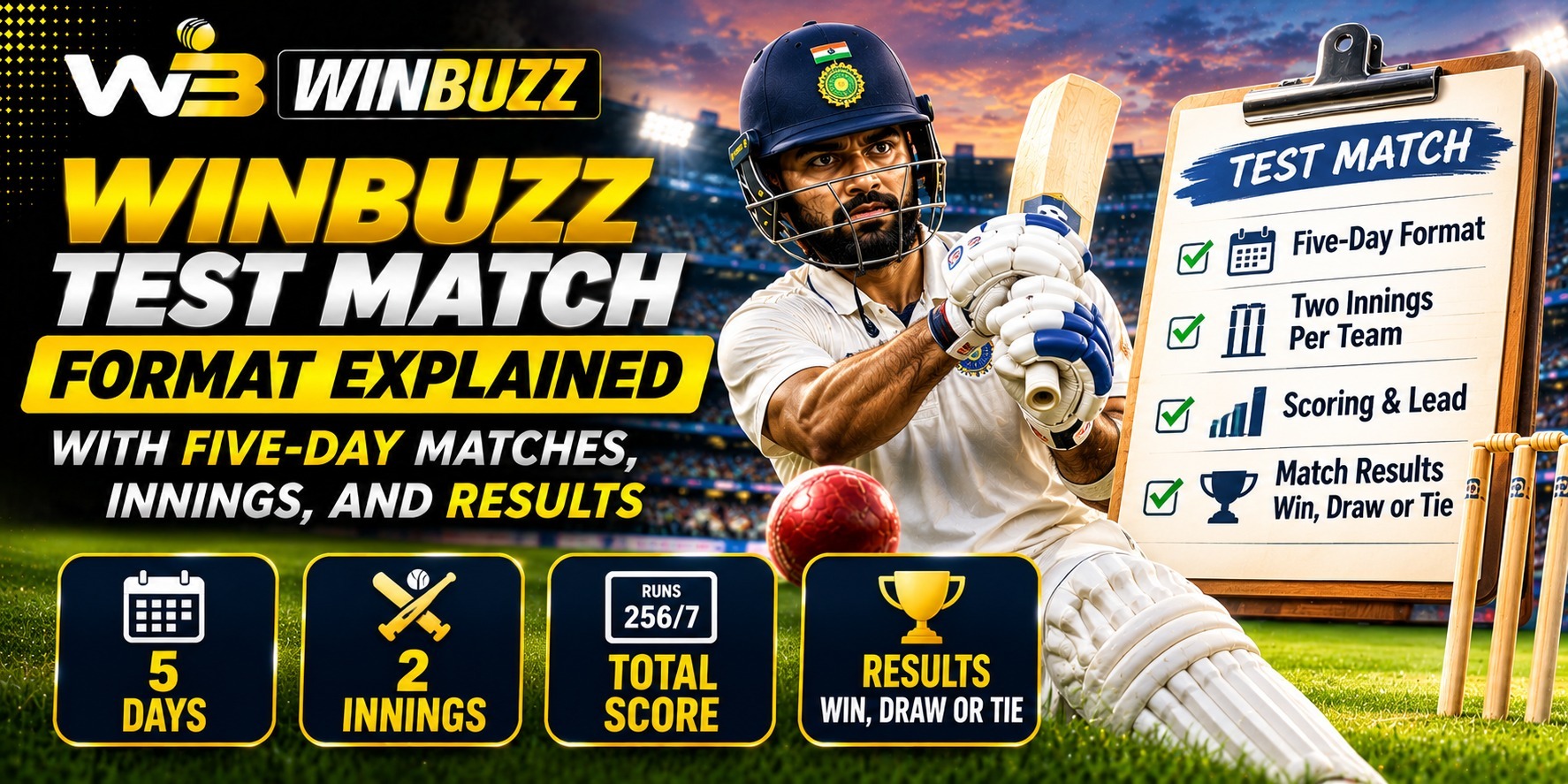
Test cricket is usually scheduled across five days, with each team allowed up to two innings. For winbuzz readers learning the format, the key is simple: a team must outscore its opponent and complete the conditions for victory before time runs out. Otherwise, the match can finish as a draw.
This beginner explanation covers daily play, innings, declarations, targets and results, with an example to make the scorecard easier to understand.
How Five-Day Test Matches Work
A standard five-day men's Test involves two teams of eleven players. Each day normally has three sessions, separated by lunch and tea, with around six hours of scheduled play.
The usual daily target is 90 overs, subject to playing conditions and adjustments. An over contains six legal deliveries. Rain, unsafe conditions and poor light can interrupt play, so the scheduled number is not always completed.
Five days is the scheduled duration, not a requirement to keep playing after a result. A match can finish earlier. An unfinished innings normally continues the next morning rather than restarting.
Unlike limited-overs cricket, a Test innings does not have a fixed allocation such as 20 or 50 overs.
What an Innings Means
An innings is one team's turn to bat while the other bowls and fields. The batting side builds runs; the fielding side tries to dismiss batters.
A team is usually all out after losing ten wickets because two batters are needed to continue. An innings may also end through a declaration or when the winning target is reached.
The normal batting order is:
- Team A plays its first innings.
- Team B plays its first innings.
- Team A plays its second innings.
- Team B bats again if necessary.
The runs from both innings contribute to each team's match total. Leading after the first innings alone does not secure victory.
Declarations and the Follow-On
A declaration lets a captain voluntarily close an innings while wickets remain, except in the match's final innings. Captains often declare to leave enough time to bowl out the opposition.
The follow-on changes the usual batting order. In a five-day match, a team batting first with a first-innings lead of at least 200 runs can normally require its opponent to bat again immediately. It is optional. Different thresholds can apply if the first day's play is entirely lost.
A Simple Target Calculation
Consider this fictional match:
| Innings | Score |
|---|---|
| Team A first innings | 350 |
| Team B first innings | 250 |
| Team A second innings | 200 declared |
Team A has scored 550 runs altogether. Team B already has 250, so it needs another 301 to finish ahead and win.
If Team B reaches 301 with six wickets lost, it wins by four wickets. If it is all out for 280, Team A wins by 20 runs.
If time expires with Team B on 280 for seven, the result is a draw. Being ahead does not automatically make Team A the winner.
Read More : Winbuzz APK Installation Guide: Features & Step-by-Step Setup
Understanding Test Match Results
For Winbuzz readers, these result descriptions explain how the contest ended:
- Win by runs: The side bowling last dismisses its opponent short of the target.
- Win by wickets: The side batting last reaches the target with wickets remaining.
- Innings victory: One team's single innings exceeds its opponent's combined two completed innings.
- Draw: The match ends without a win or tie, often because time runs out.
- Tie: All innings are completed and the teams' aggregate scores are equal.
A draw and a tie are different outcomes.
Conclusion
To follow your next Test, identify the current innings, compare the teams' combined runs, and check the wickets and time remaining. These details explain whether a side is building a lead, chasing victory or trying to survive. If you searched for winbuzz login before reading, keep account access separate from understanding the match: cricket's result depends on the official score and playing conditions.
FAQs
Does every Test last five full days?
No. A result can end the match earlier, while interruptions can reduce playing time.
Must both teams bat twice?
No. An innings victory can occur without the winning team batting a second time.
Do wickets reset in the second innings?
Yes. Each team begins its second innings with its wickets available again.
Does rain automatically mean a draw?
No. Play can resume and produce a winner if sufficient time remains.
What does 200 declared mean?
The captain ended the innings at 200 runs voluntarily, rather than waiting for the team to be all out.