
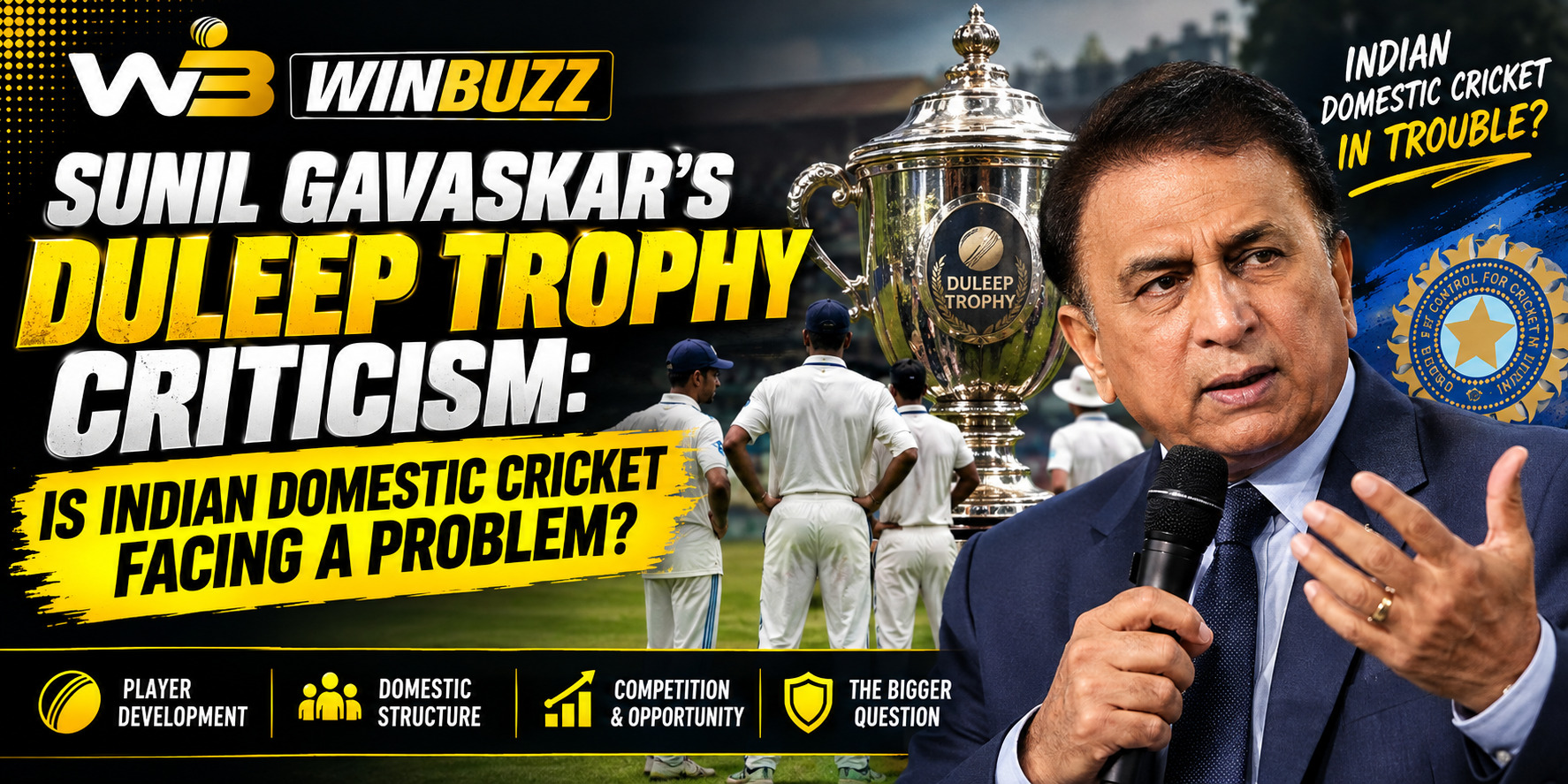
 Sunil Gavaskar's Duleep Trophy Criticism: Is Indian Domestic Cricket Facing a Problem?
 2026-09-14
Introduction
Indian domestic cricket has once again come under the spotlight after Sunil Gavaskar criticised the approach taken during the 2026 Duleep Trophy final. East Zone won the title after taking a huge first-innings lead over South Zone, but the match eventually ended without an outright result. Gavaskar questioned why the team did not push harder for a complete victory, raising broader concerns about how first-class cricket is being approached.
The debate is particularly relevant because domestic cricket is expected to prepare players for the demands of international Test cricket. Winbuzz cricket coverage has highlighted growing interest in whether India's domestic structure is providing enough opportunities for bowlers and batters to develop the skills required at the highest level.
What Happened in the Duleep Trophy Final?
East Zone produced a commanding performance in the final, scoring 708 in their first innings and dismissing South Zone for 336. That gave East Zone a substantial first-innings advantage.
East Zone then scored 388/7 before the captains agreed to end the match, with the first-innings lead enough to decide the champion.
The major talking points were:
- East Zone secured a huge first-innings lead.
- South Zone struggled to match that total.
- The match finished without an outright victory.
- East Zone were crowned champions because of their first-innings advantage.
Why Did Gavaskar Criticise the Approach?
Gavaskar's concern was not simply about the Duleep Trophy result. His criticism focused on the broader purpose of first-class cricket.
He argued that domestic matches should encourage teams to pursue outright victories rather than becoming satisfied with first-innings leads. He also linked this issue to India's difficulty in taking 20 wickets in Test cricket.
For Gavaskar, bowlers need regular opportunities to experience the pressure of taking all 20 opposition wickets. Without that challenge, he believes domestic cricket may not fully prepare them for international Test conditions.
Why First-Class Cricket Matters
The Duleep Trophy and Ranji Trophy form important parts of India's first-class structure. These competitions give players opportunities to develop skills that are difficult to replicate in shorter formats.
Domestic cricket helps players improve:
- Long-innings batting
- Bowling consistency
- Patience and concentration
- Fitness across multiple days
- Tactical decision-making
- Ability to perform under pressure
A strong domestic system therefore acts as an important pathway toward international cricket.
Is Indian Domestic Cricket Facing a Bigger Problem?
Gavaskar's latest criticism comes alongside his broader concerns about the domestic calendar. He recently questioned the 2026-27 Ranji Trophy schedule, arguing that its interruption for white-ball competitions and the IPL auction reflects an excessive focus on the IPL at the expense of uninterrupted first-class cricket.
This raises several questions about the future of domestic cricket:
- Is first-class cricket receiving enough attention?
- Are players getting enough multi-day cricket?
- Are bowlers being encouraged to take 20 wickets?
- Does the domestic calendar provide enough continuity?
- Is the IPL influencing domestic priorities too heavily?
What Could Be Improved?
The current debate does not necessarily mean India's domestic structure is failing. Instead, it highlights areas that could potentially be strengthened.
Possible improvements include:
- Encouraging teams to pursue outright wins
- Protecting the importance of first-class competitions
- Creating a more consistent domestic calendar
- Giving bowlers greater opportunities to bowl long spells
- Maintaining a clear pathway from domestic cricket to Test selection
These changes could help preserve the traditional value of first-class cricket while adapting it to the modern schedule.
The Role of Young Players
Domestic competitions remain particularly important for emerging players. The 2026 Duleep Trophy also showcased young talent, including Vaibhav Sooryavanshi, who attracted attention for his performances and decision-making during the tournament.
For younger cricketers, challenging multi-day matches can provide valuable experience before they move into senior international cricket.
What This Means for Indian Cricket
The discussion around Gavaskar's comments goes beyond one Duleep Trophy final. It raises a larger question about what Indian domestic cricket should achieve.
If first-class cricket remains focused on developing complete cricketers, players can enter international cricket better prepared for demanding situations. But if scheduling and results increasingly encourage shorter-term priorities, there could be concerns about long-term development.
Fans following Indian cricket updates through Winbuzz com can expect continued discussion around domestic competitions, player development, and the balance between different formats.
Conclusion
Sunil Gavaskar's criticism of the Duleep Trophy final has opened an important discussion about the purpose of Indian domestic cricket. His concerns about first-innings leads, wicket-taking, and the wider domestic calendar highlight the need to keep first-class cricket central to India's player-development system.
Indian cricket has an enormous talent pool, but maintaining a strong pathway from domestic cricket to the international level will require careful scheduling, competitive matches, and continued emphasis on the skills needed in Test cricket.
FAQs
1. Why did Sunil Gavaskar criticise the Duleep Trophy final?
Gavaskar was disappointed that East Zone did not pursue an outright victory after building a huge first-innings lead.
2. Why is the Duleep Trophy important?
The Duleep Trophy is a first-class competition that gives domestic players valuable experience in multi-day cricket.
3. What is Gavaskar's concern about Indian bowlers?
He believes domestic cricket should provide bowlers with more opportunities to take all 20 wickets, helping prepare them for Test cricket.
4. Is the IPL affecting domestic cricket?
Gavaskar has criticised aspects of the domestic schedule, particularly the interruption of the Ranji Trophy around white-ball competitions and the IPL auction.
5. Can domestic cricket help India's future Test team?
Yes. Strong first-class competitions can develop batting patience, bowling endurance, tactical awareness, and the ability to perform over multiple days.